
![North West Mounted Police (1940) [1940 Week]](https://images.squarespace-cdn.com/content/v1/54206d12e4b0e2c159748fd6/1426275458518-7Q0RY8OT3IQBO2XEW3BE/image-asset.jpeg)
North West Mounted Police is a bad movie in many ways. It is a Cecil B. DeMille spectacle, which is what he was determined to do, but in this case the very concept of a spectacle for this story seems misguided. Using a rebellion of a minority group against the American government as a background is not a good idea, especially if it turns the rebels into caricatures and uses it to paint the North West Mounted Police, a group of horse-riding Canadian policemen, as heroes. Add in some intercultural romance, betrayal, honor and many stereotypes about natives and women and you get an overlong piece of pseudo-propaganda with overly bright colors and strange acting. It is a movie that has very problematic ethical standards and is not well-made. This is not a movie that needs to be remembered.
![Comics Are for Everyone: 1940 Edition - Spanking During War Times [1940 Week]](https://images.squarespace-cdn.com/content/v1/54206d12e4b0e2c159748fd6/1426273710324-6PFI7RL5MCUQTOH0TWA3/image-asset.jpeg)
(Coincidentally, this is the 200th post on this blog! Yes, go and count, it's true. Hooray!)
Comics in 1940 were very different than they are now. If you know anything about comics history you know that publishers back then didn’t really care about artists or writers, let alone royalties. Stories were cobbled together with no time and not much care. That the mess of the origin of many famous characters is the basis for what we still read and watch today is somewhat amazing. If you actually look at those comics, you see no great art in most cases and certainly no stories that are well-written. I decided to take a look at some #1s that came out during that year and focus on the most interesting, funny, weird or problematic panels.
![The Great Dictator (1940) [1940 Week]](https://images.squarespace-cdn.com/content/v1/54206d12e4b0e2c159748fd6/1426065677180-XSJYL45YE69EK4T7YH0K/image-asset.jpeg)
The Great Dictator is a true classic in theory, a movie many people know and that seems to be relevant even today after Charlie Hebdo and The Interview and any satire that focuses on dictators. But I wonder how many people actually know the movie and like it as a movie as opposed to a concept. The movie ranks very high on the IMDb user ranking and after seeing it, I am surprised by that. It is not a bad movie at all and some scenes are really good, but overall I found it to feel forced, uneven and, worst of all, not very funny. I know, sacrilege!, but I watched the movie with the most open mind and was constantly stunned how jokes fell flat and how little payoff there often was. Often the satire is not really sharp and rather relies on slapstick, but, I think, even then slapstick that is mediocre. The editing is off in many, many scenes, hurting the movie’s pace. The acting was great throughout, though. Maybe my expectations were too high, but I was disappointed. Sure, if you account the time and circumstances, maybe you can’t really expect more, but the question is if the movie should be judged simply on its intentions or on its actual quality.
![Poster of a Girl - 1940 Edition: You May Kiss the Doll Now [1940 Week]](https://images.squarespace-cdn.com/content/v1/54206d12e4b0e2c159748fd6/1426058902384-7JTYE8ZAGATT1K99B2AZ/image-asset.jpeg)
There’s no theme week without posters. Luckily, there aren’t so many posters to find from 1940 (at least not as easy as with more recent years), so the list is much shorter this time. Interestingly, the designs are much more sparse and simple than in later years. So, there is not quite as much to analyze as usual, but still enough, so here we go.
![Waterloo Bridge (1940) [1940 Week]](https://images.squarespace-cdn.com/content/v1/54206d12e4b0e2c159748fd6/1425988346126-75M5SBE2L99FZDMXUJMW/image-asset.jpeg)
(spoilers ahead, but you don't care, right, it's a 1940 movie)
Waterloo Bridge is an odd film to judge. On the surface I liked it. The acting was quite good, the dialogue is well written and the direction by Mervyn LeRoy is good. It is an entertaining movie, apart from its plot development and moral, especially concerning women. I have rarely seen such a strange mixture of serviceable filmmaking and questionable ethics. Interestingly, for a movie made in 1940, it is set mostly during World War I but also includes Britain declaring war on Germany in World War II, clearly appealing to audience’s emotions at the time. Anyway, there are worse old movies you could watch and this one at least offers the opportunity for interesting post-watching discussions.
![For Whom 1940 Tolls [1940 Week]](https://images.squarespace-cdn.com/content/v1/54206d12e4b0e2c159748fd6/1425849563711-OH0TGDW6SWKDON1MNJPN/image-asset.jpeg)
It’s 1940 week! Can you tell I’m excited? I am always looking forward to theme weeks in general because they provide a clear structure for me and they force me (well, by my wish) to post seven posts a week. Which is much easier when you can follow a clear guideline or a theme to build around. I’d do more theme weeks, if there were more popular. Anyway, on top of all of that this is finally an “old” theme week, something not just beyond what I actually experienced (everything back to the 80s) or even beyond what I know a lot about (the 60s and 70s). I don’t know much about this year or even decade, which makes this all the more interesting and exciting to me. Let’s get to it, shall we? (as they said in 1940, I guess).

![Badlands (1973) [1973 Week]](https://images.squarespace-cdn.com/content/v1/54206d12e4b0e2c159748fd6/1422649230591-TR3TUWHRYO51YHS86J35/image-asset.jpeg)
(minor spoilers)
When I checked for 1973 movies and saw Badlands, I knew I had to take it. I had never seen it before, but how I could not use the opportunity for watching Terence Malick’s first movie? I really liked all of his movies I have seen up to now and I really had been wanting to see Badlands for a while. Anyway, it is definitely a good and fascinating movie. It worked better for me in the first half than in the last, but overall the story of those two young people drifting through the U.S. is worth watching and is not at all the way you would expect it. The images are beautiful and haunting and even if you think you’ve seen all of Malick’s insertion of nature images, I always find it powerful. Early on, he shows this holistic view of the world and you see that in Badlands as much as you see it in The Tree of Life thirty years later. The acting is great, the music is excellent (I had an epiphany when I realized that my favorite music from True Romance is no original Hans Zimmer score, but a classical track by Orff that Malick used in his spiritual predecessor to True Romance. I never knew…) and increases this strange, dream-like, melancholy atmosphere that accompanies ever killing and escape from civilization. I’m not sure about the ending of the movie because I felt similar to Sissy Spacek’s character in the end, which made it harder to engage with the movie.
![Poster of a Girl - 1973 Edition: [1973 Week]](https://images.squarespace-cdn.com/content/v1/54206d12e4b0e2c159748fd6/1422615769351-Z3TBNUIHL12V8YGS726V/image-asset.jpeg)
It’s time for another poster post since looking at posters from 1973 is incredibly intriguing. And you’ll see some amazing posters here. Man, things were really different back then, sometimes for better, but mostly for worse. Keep in mind that many of the more outrageous posters are of movies that are obvious B-movie trash, but then again there are some posters that look silly and have some known names on them, on movies I have never heard of. As always, I scanned the IMP page for 1973 and picked a lot of posters to look at. I’ll put them in categories again, like in 1980, because I just couldn’t leave out so many of them and the themes are very recurring. There’ll be a gallery for categories with many posters so you can see for yourself, but I’ll highlight some favorites. This is not the week of short articles!
![Soylent Green (1973) [1973 Week]](https://images.squarespace-cdn.com/content/v1/54206d12e4b0e2c159748fd6/1422549660603-Y9GTZ5HN4AXAJXIBOMKX/image-asset.jpeg)
Soylent Green is one of those sci-fi-classics where people rarely talk about the actual movie and much more about its famous final line of dialogue. The movie is really fascinating because it is such a dark, extremely dystopian future that is relentless in its hopelessness. It tries to alarm people at the time, to avoid this future, but then again, the way people act here, you couldn’t believe that anyone is able to change or do anything good. I really liked this dark atmosphere, the special effects and some of the ideas about the future. The movie is set in 2022, so there is some of that fun of how much the movie is wrong about the future. And how much it is right. It is not a perfect movie at all, the plot doesn’t really move forward much and is obviously just there to reach the shocking conclusion. The misogyny is almost unbearable (more on that below) and Charlton Heston does not play a very appealing main character. But there is Edward G. Robinson’s amazing final performance and many fascinating little details that keep you entertained.
![You Belong on the Radio - 1973 Edition [1973 Week]](https://images.squarespace-cdn.com/content/v1/54206d12e4b0e2c159748fd6/1422473579010-0U55XSDMDTBHJ3JHPW4J/image-asset.jpeg)
I noticed that looking at older songs is somewhat more interesting than current songs. The problem with current songs is that it is hard to find anything new to say, since most of them talk about the same things in the same way. Which is something I also notice when I look at songs from a particular year, like 1973, but that helps getting an idea for the feel of that time. Anyway, this time I was really struck how similar the themes found in the songs are and how well they fit into that period (and also fit to everything else I am looking at for this theme week). Let’s go!
![American Graffiti (1973) [1973 Week]](https://images.squarespace-cdn.com/content/v1/54206d12e4b0e2c159748fd6/1422309428305-QH96FFRY8PPONF9TR9CW/image-asset.jpeg)
(some spoilers)
American Graffiti is an odd movie, I think, not particularly bad, but also not really exciting. There isn’t that much of a plot and, I would argue, not that much character development to go on. Which doesn’t make the movie bad, but for a coming-of-age movie I found it was lacking a bit of “coming”. Some characters are indecisive and in the end make a decision, but this one night the movie covers doesn’t completely change anyone’s life. Of course it’s George Lucas’ movie before Star Wars, but since it was a hit back in 1973, that doesn’t really matter for its importance and attitude. It really depends on your interest in its setting, more than in its message, I guess. So, let’s focus on that.
![It's Hard to Be a Saint in 1973 [1973 Week]](https://images.squarespace-cdn.com/content/v1/54206d12e4b0e2c159748fd6/1422214689142-G681XVYBQK674YZTRVRH/image-asset.jpeg)
It’s 1973 week! Finally, we have a week that is set before 1980, the first one from a time before I was born. This definitely puts a spin on it, although it’s still not that far away from 1980 week as there are still a couple of decades left (I set my limit at 1930). What can we expect from 1973? It’s not the 60s anymore, so the disillusion and darkness might creep in already. I think it’s a very interesting year, especially because most upheavals had happened already. It’s a time where people got used to seeing the world with different, more critical eyes, but also with less hope than in the 60s. Anyway, I’m, as always, excited!


As I said at the beginning of the week, this was an experiment. I had this crazy idea to do a theme week on one year and to continue doing that on random years in the future. I really enjoyed planning and writing it, but I’m not sure how well it was received. The statistics are never as clear as I wish and while the number of visitors was good, it was a bit worse than the last two weeks. I don’t take the statistics seriously enough to say it was a flop, but without any other feedback, I don’t have much to go on.

(spoilers, I guess, but either you’ve seen it already or you probably won’t ever want to anyway)
The Empire Strikes Back is not a movie I thought would ever end up here, though it’s always a challenge to find something worth discussing in popular movies like this. My motivation was in picking my favorite movie from 1980 and I realize that it’s Empire. It’s probably the best Star Wars movie because it’s so entertaining and dark at the same time, it’s never boring and the ending still breaks my heart. The music is some of the best film music ever composed and the cliffhanger at the end laughs at all those movies nowadays that call themselves Part 1 and Part 2 (except Kill Bill, maybe). It’s really a good movie and it surpasses all the other movies from 1980 for me (although, Ordinary People came in close just a few days ago, surprisingly).
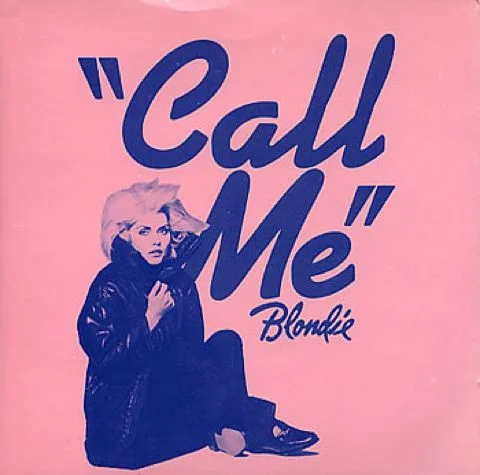
Of course I couldn’t do a year’s theme week without looking at this year’s songs. Because there is only one 1980 week, I decided to look at the top 10 of the top songs of the year from Germany, the UK and US simultaneously, since they also overlap pretty much. Is the music of 1980 as dark, detached and depressing as everything else this week? We’re about to find out!
(spoilers ahead)
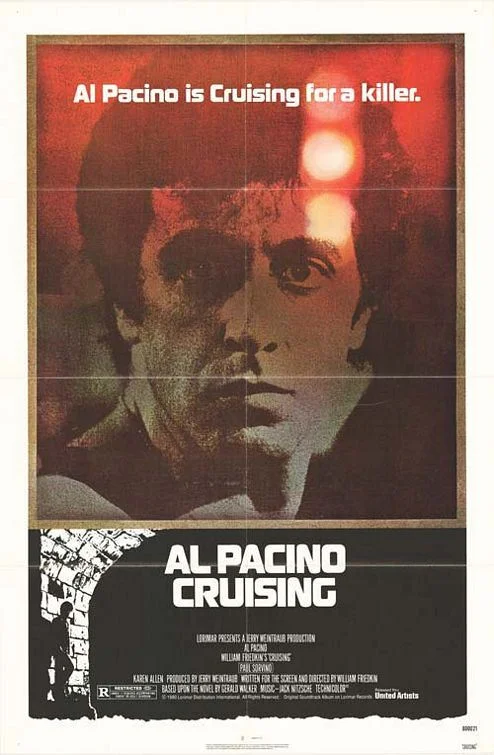
Cruising is a confused movie, confused about its intention, its story and ending, but also about what it wants to say about homosexuality. And, to get straight it, it should say something about homosexuality. Being one of the few movies to deal with the issue, it shouldn’t act like it doesn’t have an opinion on it. But the movie is so unfocused and messy that it shouldn’t be a real surprise. On the surface a crime mystery about a killer who kills gay men who indulge in the leather scene, the movie doesn’t do much but being grim, cold and dark, while having a protagonist that never allows us to know what happening inside of him. The movie got its attention only because it tackled homosexuality and supposedly showed gay sex in a graphic way before it had to be cut. Would this be a movie a killer in a heterosexual swinger scene, it probably would never have seen the light of day.

I almost couldn’t decide on an album to pick from 1980, not because there was no good music, but because there wasn’t much that spoke to me. There’s not a favorite album of mine from 1980 or something with a personal meaning. So I just picked an album I like and that I knew would offer me something to write about, Joy Division’s Closer, which was released two months after Ian Curtis had committed suicide. It is unsurprisingly dark and cold, yet undeniably powerful.
(spoilers ahead)
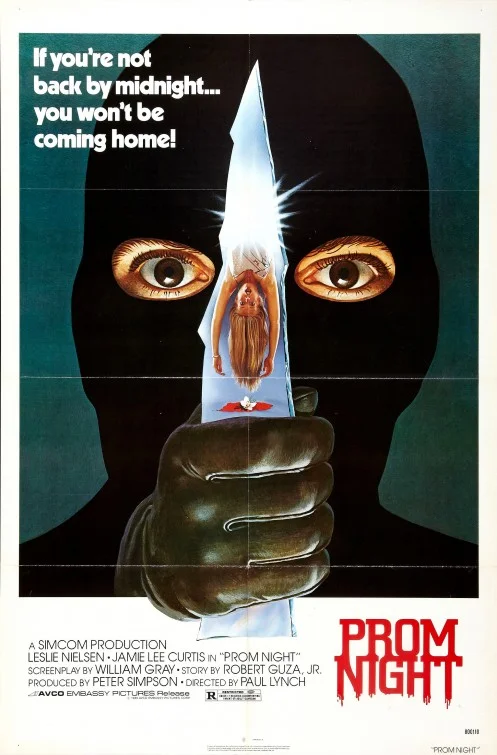
Prom Night is a terribly formulaic and terrible slasher movie. It sets up everything it needs for a by-the-numbers slasher concept and follows it through without even the slightest hint of surprise. It starts out with a wrongdoing in the past, makes a time jump of six years (in which all the characters age by about 15 years), just so that a killer can take revenge on them for what they did as kids. It’s amateurishly filmed and acted, the dialogue is boring and even the murders are uninventive. Actually, the murders astonished me the most, since there is no attempt made to graphically show them at all, although movies like this are all about showing grisly murders. A lot of them happen off-screen and it takes the movie over an hour to even get there. Considering this is one of the first examples of slasher movies, it should have been clear to anyone seeing it in 1980 that there wouldn’t be another gem like Halloween anytime soon.
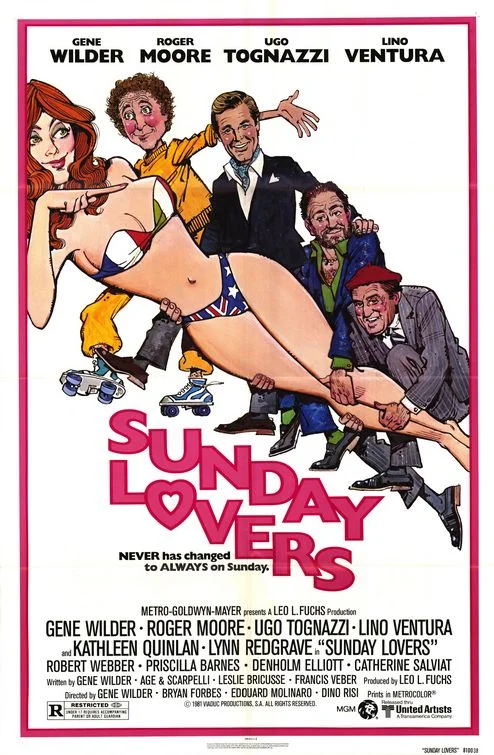
It’s 1980 Week! What does that mean, you ask? Well, I decided to try out doing theme weeks from time to time, dedicating each post during that week to cultural artifacts (movies, comics, books, music) or historic events from one specific year. In the future, I will pick those years randomly, but for a start I decided on 1980, the year I was born, because, well, today’s my birthday. I don’t know how this will work out, so it’s an experiment. But I like experiments, obviously, which means I’m very excited!
To get an overview of this particular year, I thought it would be nice to look at its movie posters. I looked at all the posters of 1980 that can be found on IMP Awards and picked out the ones I found interesting. Which is still a lot (49). But because there are so many, I grouped them in categories, because many things repeat themselves. Without further ado, let’s give it up for 1980!

![Die bleierne Zeit on Golden Pond: The Movies of 1981, Part 2 [1981 Week]](https://images.squarespace-cdn.com/content/v1/54206d12e4b0e2c159748fd6/1442737599184-9UR0ZA1IKLHVP3U7PEZ9/image-asset.jpeg)
![Modern Problems at the Zombie Lake: The Movies of 1981, Part 1 [1981 Week]](https://images.squarespace-cdn.com/content/v1/54206d12e4b0e2c159748fd6/1442605803381-362BPLQ0ASP7S88QMJIO/image-asset.jpeg)
So, I watched 15 movies for this theme week and write about two of them separately. What about the 13 others? Will they just vanish and be forgotten? I decided to write one article about all of them instead and focus on different aspects. After I was done, it was too much for one article, so I decided to split it in two articles.
![Poster of a Girl: 1981 Edition [1981 Week]](https://images.squarespace-cdn.com/content/v1/54206d12e4b0e2c159748fd6/1442563604533-9QMZPZEPZD21NMBRZ1WL/image-asset.jpeg)
I just love movie poster analysis too much to not do it in a theme week. I know things often repeat themselves, but to me, instead of getting boring, drives the points just home even more. So here we go again, 1981 style!
![Enter the Ninja (1981) [1981 Week]](https://images.squarespace-cdn.com/content/v1/54206d12e4b0e2c159748fd6/1442351353182-LYIBQ85LDGFIS8MJY7FJ/image-asset.jpeg)
(spoilers ahead)
I watched so many movies for this week and when I decided to stop I had a hard time deciding which movies to focus on. Surprisingly, I picked Enter the Ninja, probably the goofiest movie of them all. But it is one of those really enjoyable bad movies that I love (and that you have to watch a dozen terrible movies before finding one). The story is a joke, the acting is horrible, even a kid could point out the continuity errors, it’s offensive in many ways and many, many, many things make no sense whatsoever. But somehow, it’s fun to watch Franco Nero play a ninja (which is a silly idea in itself), only to clearly see that he never does any ninja stuff which is reserved for his stunt double (and original lead actor Mike Stone). The fight scenes are even decent in some regard, just everything else is incredibly sloppy and over the top. If you enjoy these kinds of movies, you’ll love Enter the Ninja.
![You Belong on the Radio - 1981 Edition [1981 Week]](https://images.squarespace-cdn.com/content/v1/54206d12e4b0e2c159748fd6/1442388975776-OD18QMM120Q35CUYEJ5Q/image-asset.jpeg)
No theme week without songs. The leitmotif for this week seems to be “detachment”, so let’s see how the popular songs of 1981 join the detached chorus.
![Blow Out (1981) [1981 Week]](https://images.squarespace-cdn.com/content/v1/54206d12e4b0e2c159748fd6/1442307280418-UKVT1OHQHLEXRI5H2HSE/image-asset.jpeg)
(spoilers ahead)
Blow Out is an incredibly cinematic movie but it never becomes just an exercise in moviemaking by actually having something to say. Still, director Brian de Palma uses every trick in the book to enhance this story and to (often) visually explore an aspect of moviemaking that is not visual: sound. That alone is fascinating to watch but the movie also works as a dark conspiracy thriller about a disillusioned generation that mourns the 60s and 70s. John Travolta delivers a great performance here with a wide range of hopelessness, excitement, anger and despair. But this is a director’s movie and I’m not the first to suggest that this might be de Palma’s finest moment both as a director and a writer. The use of split-screens, change of focus with special lenses, long takes and a circling camera (in one spectacular scene that doesn’t ever seem to stop) are impressive and effective at the same time. After watching so many movies from 1981, this one stands out so spectacularly that even weeks after seeing it, it makes me feel good to see so much passion on the screen.
![Quest for 1981 [1981 Week]](https://images.squarespace-cdn.com/content/v1/54206d12e4b0e2c159748fd6/1442260314360-MNY4L5MDBHO72S8KR0ZD/image-asset.jpeg)
It’s 1981 week! This is sort of an anniversary theme week because about a year ago I had the first theme week about 1980, the year I was born, and now, one year later (and one day short of my birthday) we’re in 1981. I was one year old and don’t remember all that much. It’s the seventh theme week already and we still haven’t been to the 30s, 50s, 60s or 90s. We’ll get there eventually, but for now we’re in 1981, also known as the year Pitbull was born (and Britney Spears. And Beyoncé. And Natalie Portman. And other people.) Let’s go!

![Poster of a Girl - 1988 Edition: Yes, It's Her [1988 Week]](https://images.squarespace-cdn.com/content/v1/54206d12e4b0e2c159748fd6/1417981461094-EAMG69RM1KUF36WZSA5K/image-asset.jpeg)
Okay, for the grand finale I have to rush an article because time is running out. I’m always trying to do seven articles for theme weeks, which just shows how much the breaks between posts are necessary. But I did it again and am proud, so there you go. Anyway, here is a quick rundown of some posters from 1988, but it’s not a complete analysis like in the last theme weeks, but more a snapshot of mostly bad examples. So, this is not representative but exemplary.
![The Land Before Time (1988) [1988 Week]](https://images.squarespace-cdn.com/content/v1/54206d12e4b0e2c159748fd6/1417898326581-0G8C88KAJ0JYNV3M35G5/image-asset.jpeg)
(spoilers ahead, which is only really relevant if you’re under 6, the movie is not that unpredictable)
The Land Before Time is a rather typical animated movie for its time, I’d say. I probably saw it as a kid but rewatched it now because I’m intrigued by children’s movies and the messages they’re sending. This movie is okay, I guess, but so clearly aimed at children, meaning it tries to be cute and soft all the time, with a fair amount of scares to balance it out. There isn’t much for adults here, which in turn means I think it’s not great for kids either. It doesn’t hurt them (depending on how harmful you view its messages), but it also doesn’t challenge them, except for emotional manipulation. It’s not a movie I necessarily would show to my kids.
![Comics Are for Everyone: 1988 Edition [1988 Week]](https://images.squarespace-cdn.com/content/v1/54206d12e4b0e2c159748fd6/1417818401908-OJBQWX0O7MP9G4184ENH/image-asset.jpeg)
Because of the amazing comics that have been released in 1988, I decided to have another comics section in this theme week. Grant Morrison and Alan Moore are big enough names for this, I guess, but we shouldn’t forget Jamie Delano. I’ll just focus on the issues published in that year, since that’s enough already. Let’s go!
![Akira (1988) [1988 Week]](https://images.squarespace-cdn.com/content/v1/54206d12e4b0e2c159748fd6/1417704071080-UZGPTXNS2GAERBDGTXKU/image-asset.jpeg)
(spoilers ahead)
Akira is one of the most visually stunning movies I’ve ever seen. I didn’t get everything about the plot, but I mostly didn’t mind because the images were so impressive and amazing that every frame is worth admiring. It’s also a fearless movie, willing to go any place it wants to go, no matter if it’s violent or nightmarish or apocalyptic or sleazy. Again, I’m not sure about the story exactly but the movie is never boring and always astonishes you with a new set piece. Its world is complete, so fully fleshed out, that it is very easy to fall into it. Sometimes you don’t know exactly why the characters are acting the way the do, but you don’t care as long as you can follow them through this world of Neo Tokyo, with its fascination for technology and brain power. It is no surprise to see Akira was very influential for many filmmakers. It’s impossible to watch this now and not think of The Matrix, to name just one. It is simply an impressive movie.
![You Belong on the Radio: 1988 Edition [1988 Week]](https://images.squarespace-cdn.com/content/v1/54206d12e4b0e2c159748fd6/1417640026738-9OOG9LB3PBBOTN2LKWFR/image-asset.jpeg)
It works just as in the other theme weeks, I look at the most popular songs from 1988 and look at the ones that stand out for some reason. Here we go!
![Above the Law (1988) [1988 Week]](https://images.squarespace-cdn.com/content/v1/54206d12e4b0e2c159748fd6/1417511544536-WOX9K7GA6I08YUSIQ4KB/image-asset.jpeg)
(spoilers ahead!)
Above the Law is a straightforward vigilante movie, which is why I picked it. I mean, it’s called Above the Law! (or Nico, but that isn’t as catchy). I haven’t seen that many Steven Seagal movies in my life because most of them are obviously bad, but this is his first and it’s not that bad really, simply seen as an action movie. It’s not too cynical, the plot is not completely absurd and even the acting is fine. It’s not a great movie but it entertains in its own way.
![It's 1988 Out There! [1988 Week]](https://images.squarespace-cdn.com/content/v1/54206d12e4b0e2c159748fd6/1417342278221-4W218H2KCWFUEL7HZVZQ/image-asset.jpeg)
It’s 1988 week! Another theme week has arrived and the random number generator brought us back to the 80s. Yes, third theme week and second time in the same decade. Well, we know something about the 80s already then, about their darkness, violence, detachment and so on. Is 1988 different than 1980 because it moves towards the 90s? I’m not sure yet, but we will see. Like last time, I’m trying to do an overview of the year to get us grounded and to put everything else into context. As in every theme week, I’m excited!

![Book Report - 2004 Edition: Building Temples, Cheering and Getting to the Final Sentence [2004 Week]](https://images.squarespace-cdn.com/content/v1/54206d12e4b0e2c159748fd6/1435988732890-VQVPVZPK5O9AGUE2BH7I/image-asset.jpeg)
I was tempted to write about music this week because the albums from this year were so important to me. But then I thought again about the books from 2004 and I wondered if I will ever have a year with at least three books that really mean a lot to me and that have something to say that fits here. So, welcome to the 2004 Book Report!
![Lemony Snicket's A Series of Unfortunate Events (2004) [2004 Week]](https://images.squarespace-cdn.com/content/v1/54206d12e4b0e2c159748fd6/1436037923608-LVAHVPNROHEIJRGEVHOB/image-asset.jpeg)
Lemony Snicket’s A Series of Unfortunate Events is awkward, but not in the way it wants to be. It wants to be Tim Burton-awkward, with strange characters in a weird world full of unusual locations, visual effects and props. And it has all of those ingredients, but its tone is what is really strange about it. It’s supposed to be a comedy, but I personally didn’t think it was very funny. Jim Carrey is so over-the-top and so much of the movie focuses on him that it’s almost distracting, like a one-man-show. I can’t really put my finger on it, but the movie didn’t work for me. I’m not even sure what its intended audience is as many jokes are not for kids but overall the movie isn’t all that appealing to adults either.
You’re probably saying: “I know what’s coming now. Posters in 2004 were sexist, just like in 2012, 2015, 1988, 1980, 1973 and 1940, always the same.” Well, yes, that’s true but I wanted to try something slightly different this time. Slightly, because instead of focusing on sexism in general, I want to focus on one particular way of posters being sexist: by naming all of the actors on the posters except some female ones. Strangely, I found a lot of examples from 2004 posters for this, so here we go.
![Man on Fire (2004) [2004 Week]](https://images.squarespace-cdn.com/content/v1/54206d12e4b0e2c159748fd6/1435699948521-10W7OILER9YBVICN1F0C/image-asset.jpeg)
(spoilers ahead)
Man on Fire is a standard vigilante/revenge movie wrapped up in a redemption story coupled with a little girl likes killer story. Because it’s a Tony Scott film, all of it is mixed with nervous editing, shaky camera, color filters and a best of music cues from this and other movies (seriously, if you know film music, it’s really weird to see a big studio movie that simply uses music from other movies). It has a great and large cast and some interesting individual scenes, but overall it’s a bit of a mess. It seems unfair to say that because so much of it is simply Scott’s late-year style, but it works more for some movies than for others (Domino, for example, was slightly better). My main issue (besides the revenge aspect I’ll discuss in a second), is that the film is so off structurally. It’s too long and divided into two uneven halves. If you like these kinds of movies, it’s certainly okay, but the imbalance in tone and story really bothered me.
![You Belong on the Radio - 2004 Edition [2004 Week]](https://images.squarespace-cdn.com/content/v1/54206d12e4b0e2c159748fd6/1435652464802-QQGWCD4O2ECNR22KM23L/image-asset.jpeg)
![Saw (2004) [2004 Week]](https://images.squarespace-cdn.com/content/v1/54206d12e4b0e2c159748fd6/1435514421930-EZXDGSK9BF0JDRO2GOXY/image-asset.jpeg)
Saw is a movie that started another horror franchise that, in the spirit of these things, simply repeated the most basic concept over and over again. Looking at the original movie, you can only barely see the appeal of continuing it, which mostly comes from the fact that not much is explained in the end and that there is one central element that producers thought was worth repeating, which, again, as in other franchises, is mostly creative ways of killing victims. That’s what drove other series, like A Nightmare on Elm Street, Final Destination or Friday the 13th. The movie itself is nothing really special, it’s not well-made, its plot and structure is a mess and the acting is serviceable at best. Its central story, two guys trapped in a room, trying to find out what’s going on, is effective, but once the flashbacks starts and the connections are overflowing the movie loses a lot of momentum. There are some nice moments, but overall I wasn’t really interested in watching more of these movies, let alone six more of them.
![One Plus One Is 2004 [2004 Week]](https://images.squarespace-cdn.com/content/v1/54206d12e4b0e2c159748fd6/1435602930612-V8BZL7ZC5TNPI0CGKFAP/image-asset.jpeg)
It’s 2004 week! Since the last theme week we’re moving 64 years into the future (past) and it also feels that long ago since we actually had 1940 week. It’s been far too long but somehow I never found enough time to prepare a week full of seven posts. But now it’s here! I was 24 in 2004 and still at university. It was three years after 9/11 but apart from that I’m not really sure what to expect. The 2000s are still so hard to grasp for me, still too close but full of personal history that I’m probably also still digesting. But I look forward to this week because unlike 1940 this week will find some resonance among my readers (or I just have to remember to write a lot about spanking…). Ready, steady, 2004!

![Poster of a Girl - 2012 Edition: Uma Thurman 2:0, Halle Berry 1:1 [2012 Week]](https://images.squarespace-cdn.com/content/v1/54206d12e4b0e2c159748fd6/1414363483190-DU05ZDK1QHIJ8TWEORY7/image-asset.jpeg)
In a close battle between an album or movie posters from 2012, posters won. Why? Because posters are slightly more fun, even if it meant browsing through lots of posters from that year (take a look yourself). I don’t write about all of them, obviously, but just a selection of the good, the bad and the most photoshopped.
![21 Jump Street [2012 Week]](https://images.squarespace-cdn.com/content/v1/54206d12e4b0e2c159748fd6/1414273756344-N8P562TZ0IHKUMUCEAYQ/image-asset.jpeg)
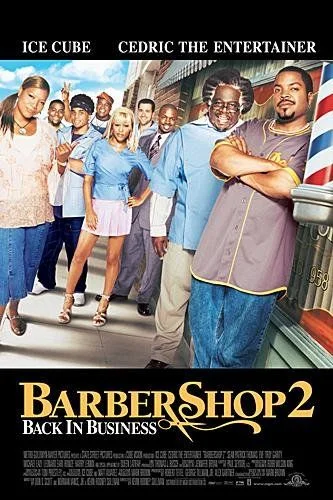
21 Jump Street is the perfect movie for this week to me. It is very popular and successful (not necessarily the same thing), it encapsulates many things I’d consider representative for this year (or our time) and it’s actually quite good. I expected to find it okay, but I really liked it and was surprised by the wit and charm of it (with exceptions). Jonah Hill (who I have a soft spot for because of Wolf of Wall Street) and Channing Tatum (who I didn’t think could act) are really good in their roles, the writing is good and the movie has many ideas. It’s not deep or anything, but it is entertaining and a little bit more, which must count for something. Some of the jokes are too vulgar (especially in a scene towards the end, which is simply gratuitous and not funny) and Ice Cube is really bad. I mean, really, really bad. But apart from that, this is a very funny movie that makes me want to see the sequel.
![Comics Are for Everyone: 2012 Edition - Occupying Jokers, Transgender Aliens and the Web of Life [2012 Week]](https://images.squarespace-cdn.com/content/v1/54206d12e4b0e2c159748fd6/1414165185838-U40FB74LYLX12JJJCHGQ/image-asset.jpeg)
As I mentioned before, 2012 had a lot of comics in it and I read many of those. So I thought today I spent some time flipping through more than 1,000 issues to see what is noticeable in those comic books. What, you say that’s crazy? Too much? You’re right, actually. I’ll try to focus on which current events were portrayed in some of those comics and also look at some interesting messages regarding humanity. So, the usual.
![The Sessions [2012 Week]](https://images.squarespace-cdn.com/content/v1/54206d12e4b0e2c159748fd6/1414078069572-CEUOYODOFX463TUD6JF7/image-asset.jpeg)
(real spoilers ahead in the last paragraph)
The Sessions is an exceptional movie not just because of its subject matter but also because of the way it deals with it. The story of Mark O’Brien, who has to live in an iron lung and is paralyzed from his neck down, is treated with the most respect you can imagine, but also with humor. Most importantly, it treats sex as a totally normal thing without embarrassment or ridicule, which I consider one of the greatest achievement of this movie. The story is touching but never goes for drama, the writing is subtle and the acting simply amazing. That John Hawkes is not a name everyone knows still amazes me, as he shines in every role he plays (his role in Me, You and Everyone We Know was revelation to me). Here, he is just perfect and still very different from many other characters he has played. The Sessions is just a very good-natured and effective movie.
![You Belong on the Radio - 2012 Edition [2012 Week]](https://images.squarespace-cdn.com/content/v1/54206d12e4b0e2c159748fd6/1413991730657-O3R8RVBS5J4WHNO4OEH8/image-asset.png)
Just like last theme week, I decided to look at the popular songs of this year to see what they’re telling us. I’m assuming the songs from two years ago don’t sound so different than the songs nowadays, but I’m still interested to see what we find in those songs. For this I’m using the lists of number one songs and top 10 songs from Germany, the US and UK, which again overlap a lot.
![Battleship [2012 Week]](https://images.squarespace-cdn.com/content/v1/54206d12e4b0e2c159748fd6/1413903040966-5MTL9IAVHXQPWQUU14ZV/image-asset.jpeg)
(spoilers ahead! – yes, you don’t want to know if the aliens win, do you?)
Battleship. Well, how to start? This is probably one of the most ridiculed movies before it came out and it is basically impossible to take it seriously. It’s a movie version of Battleship, so what could you possibly expect? The story is absurd, the filmmaking is almost irrelevant, there are some moments that could be seen as entertaining, but, come on, no one needed this movie. It’s not the worst; it’s just dumb and unnecessary. Oh, the plot? Aliens attack, battleships fight them back. Liam Neeson is just there for the paycheck, but not for the actual movie. What else do you need to know?
![It's 2012, You Know? [2012 Week]](https://images.squarespace-cdn.com/content/v1/54206d12e4b0e2c159748fd6/1413842286318-NLFWFDFC106Q41S9TJCF/image-asset.jpeg)
It’s 2012 week! Yes, another theme week because while the last week (1980) didn’t go exceptionally well, I see people going back to those articles again and again. Maybe it’s the year and not the theme, but we’ll see about that now. Oh, and because I really like doing these. I randomly picked another year and it turned out to be 2012. First, I wasn’t happy with it since it’s just two years ago and I wrote about four different 2012 films already. I mean, can I really attempt to get an idea of what 2012 meant? I don’t know, but because I reacted so negatively at first, I realized that this is a challenge. And I like challenges. I also wanted to do things a bit differently this time by starting off with a kind of overview first, the basis for the rest of the week. For that intent, I look at what happened in 2012 to see if I can draw any conclusions from it. And to review for myself what I know about this year. As of writing, I neither know what will come up in my movie analysis or other articles nor do I know what this overview will result in. I know which movies I will write about but that’s really it. Too experimental? I hope so! So, let’s all go and celebrate as if it's only two years ago.
Northwest Passage is a better film than North West Mounted Police, but that doesn’t really mean that much. What makes it better is that it is filmed better, there are some spectacular scenes, the acting is better and the colors don’t blind you. When it comes to the depiction of Native Americans this might be even worse. At least it shows the extinction of Native Americans as detailed and gruesome as possible, while not taking any moral stance against it and actually justifying it most of the time. This is essentially a war movie, but instead of soldiers killing other soldiers in WWI or WWII, we have rangers taking out Native Americans. While they walk through swamps and forests, there is almost an impossible Vietnam vibe to all of it. It sort of works as a war movie adventure, in depicting the struggles the soldiers have to get through (the action scene in the river is kind of cool), the way they plan their mission and the difficulty of getting back home. In that sense it is almost enjoyable, if you ignore any ethical alarms setting of at watching the glorification of war and genocide.